Bigger Is Not Always Better: A Guide to Choosing Displays for Experiential Advertising

A digital display’s impact depends on more than its size. Audience distance, message objective, and the desired action determine the right format. This guide helps Iranian brands and event organizers choose between large, interactive, and close-range displays.
In many out-of-home advertising, exhibition, and booth-design projects, display size has become a measure of brand strength. The common assumption is that the larger the screen, the more attention it attracts—and the more successful the campaign will be. Yet a massive display in the wrong location may simply become part of the environment’s visual clutter. A smaller screen, positioned at the right distance and in front of the right audience, can create a much more meaningful interaction.
Display selection should begin with the campaign objective, not the screen diagonal. Is the goal to make the brand visible from a distance? Or should the audience examine a product, scan a QR code, complete a form, or enter an interactive experience? Depending on the answer, a large LED billboard may be the right choice. In other cases, a kiosk, desktop display, augmented-reality experience, or even a holographic installation may deliver better results.
Large Displays: Built for Visibility and Environmental Signposting
Very large displays are valuable when the primary objective is broad awareness and creating a landmark within the environment. Busy squares, roadside routes, open spaces, entrances to major centers, and locations with wide sightlines are all suitable settings for this type of display.
In these situations, the audience is usually moving and has little time to read detailed information. A large display must therefore communicate the brand’s presence and core message within seconds. A strong visual, suitable contrast, controlled motion, and a short message generally perform better than lengthy copy and dense information.
However, a large display is not necessarily the best option at close range. As people approach it, the screen may get lost among the signs, lights, and competing messages around it. An installation that initially appears to be a powerful visual landmark can also feel less relevant to the audience’s immediate needs when viewed up close.
- Best suited to: Building awareness, establishing brand presence, and attracting initial attention
- Best locations: High-traffic spaces with open sightlines
- Best message style: Short, visual, and understandable within a few seconds
Close-Range Displays: Designed for Interaction and Conversion
When the audience is close to a display, the nature of the communication changes. A 15- or 22-inch display positioned about three feet from a customer can create a personal, focused point of contact—an experience that a 75-inch display mounted 20 feet high may not provide.
Smaller displays work well at the end of a shelf, in a waiting line, at a kiosk, at a fuel station, near an entrance, on a counter, or in a fitting room. In these locations, people typically pause for a few extra moments, and the screen sits within their natural field of view. This proximity makes it possible to show product details, comparisons, complementary offers, customer reviews, and usage instructions.
For Iranian brands, this approach is especially relevant in retail stores, service branches, exhibition booths, and specialist events. A close-range display can become part of the decision-making journey rather than merely serving as booth decoration. In these situations, equipment costs should be evaluated against the number of high-quality interactions and measurable actions—not simply the size of the installation.
- Best suited to: Engagement, lead generation, registration, purchase, or download
- Best locations: Beside the product or wherever the audience naturally pauses
- Best message style: More detailed, conversational, and tailored to the audience’s immediate needs
Content Must Match the Viewing Distance
A common mistake is to produce one creative asset for every screen size and viewing distance. Content designed for a large display must remain legible from far away, so it should rely on one primary image, a limited number of words, and a clear visual identity. Complex copy, crowded tables, and fine details rarely get the attention they need on such a screen.
By contrast, a close-range display can provide more information. For example, a food brand can show ingredients, serving suggestions, or complementary products on a screen beside a shelf. A service company can use a kiosk to present the request process step by step. At an exhibition booth, a nearby screen is well suited to showcasing case studies, technical specifications, or answers to frequently asked questions.
Subtle motion, time-sensitive content changes, and step-by-step design are more effective on close-range displays, but these features should not create clutter. The essential principle is that the audience should understand what they are seeing now and what they should do next.
- For long distances: Large visuals, very short copy, and a single message
- For close distances: Product details, guidance, comparisons, and educational content
- For all distances: Strong contrast, readability, and a clear call to action
Physical Distance Also Shapes Psychological Distance
When people encounter a display a few steps away at eye level, they are more likely to experience it as a phone screen, a personal guide, or a conversation with a salesperson. This setting is suited to messages that build trust and address a specific need—not simply generate broad excitement.
Large displays tend to feel more like broadcast media or public announcements. This makes them useful for introducing an event, announcing a brand’s presence, or creating a memorable image. In close-range communication, however, a more conversational and advisory tone can have greater impact. Instead of making a general claim about quality, the message can present a specific product feature, a customer experience, or guidance on how to choose.
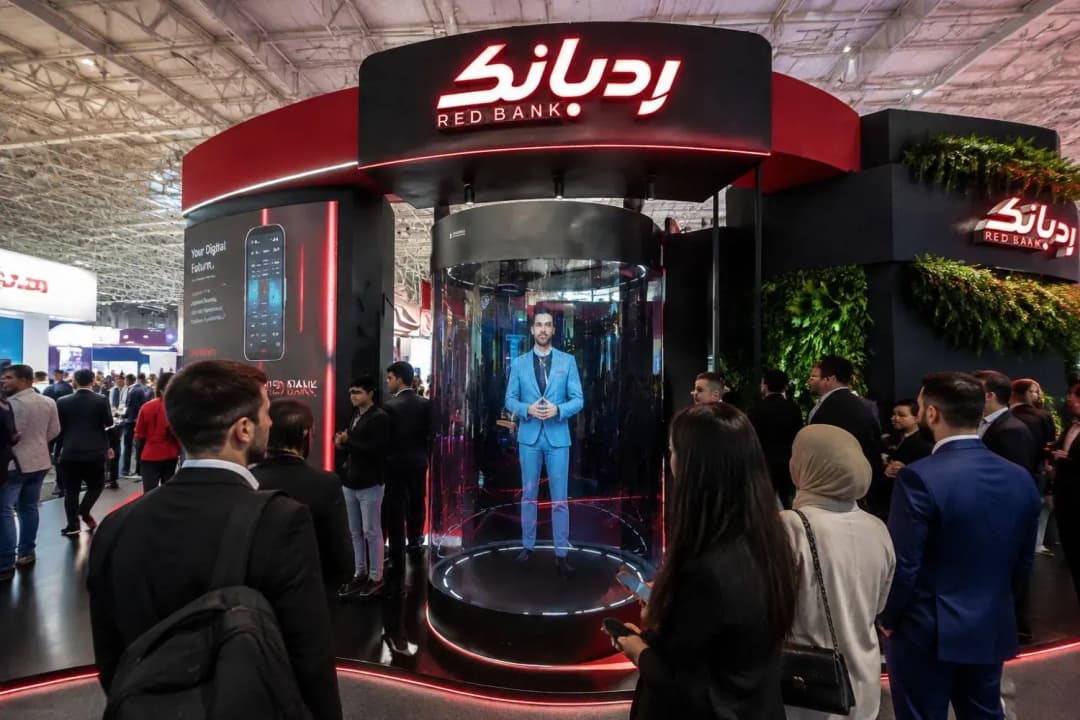
This distinction is also important in booth design. An LED wall can attract visitors’ attention from the aisle; a nearby touchscreen or kiosk can then guide them toward product exploration and data capture. In more advanced projects, augmented reality, virtual reality, or holographic effects can also attract attention or explain a product. These technologies are most valuable when they form part of the experience journey—not when they are used merely to showcase innovation.
The Call to Action Must Be Within Reach
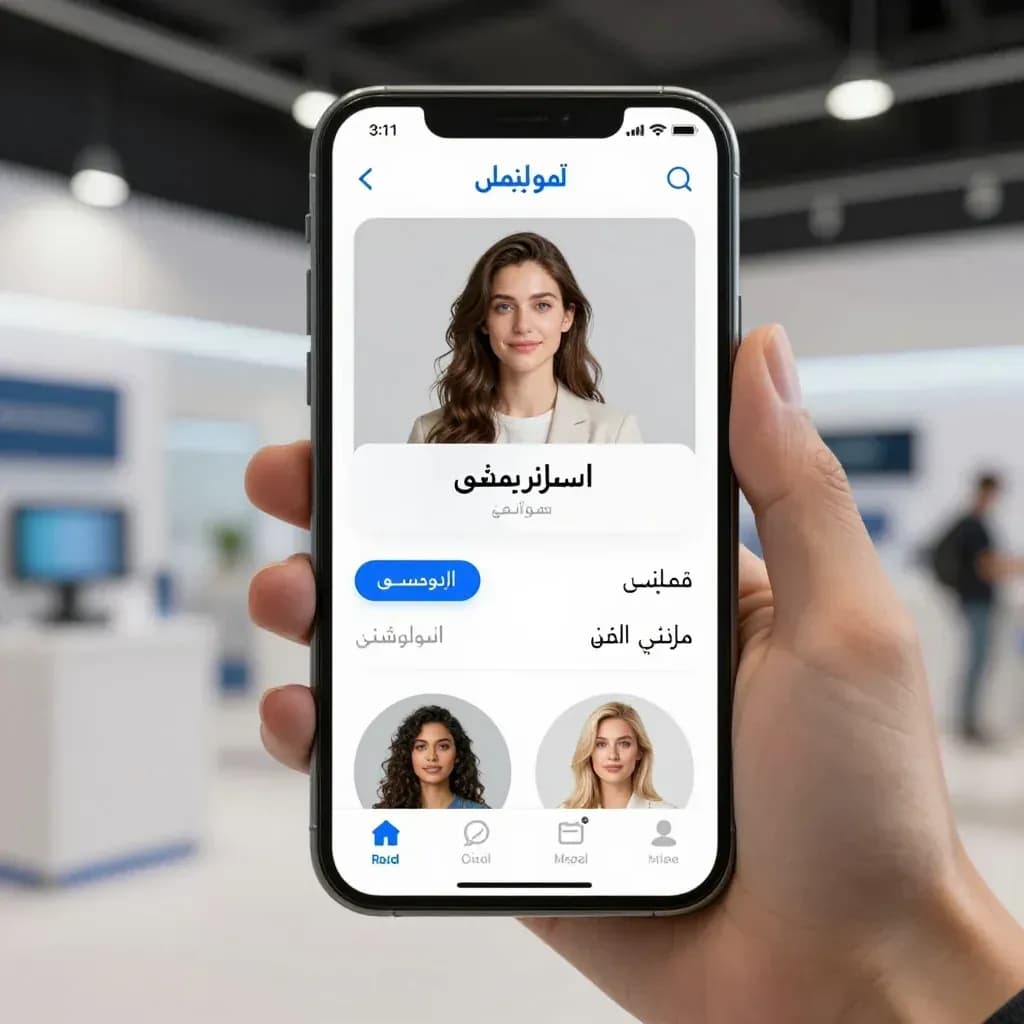
QR codes, web addresses, NFC tags, and prompts to touch the screen are effective only when the audience can easily approach and use them. Placing a QR code on a large display installed high above the ground creates a physical barrier: the audience must raise their phone, frame the code from a distance, and pause amid the crowd. This can lead to scanning errors or discourage people from taking action.
By contrast, a QR code on a desktop display or kiosk positioned at eye and hand level creates a more natural path to action. Users can scan it, tap the screen, or enter their information without having to obstruct the flow of other people for several seconds.
To evaluate such a campaign, do not report impressions alone. Scan rate, form completion, chat starts, appointment bookings, or request submissions reveal whether the design moved the audience from viewing to doing. When AI, a chatbot, or an interactive assistant is involved, the same principle applies: technology should reduce friction and provide a more relevant response, not add another step to the experience.
- Place the CTA at eye level or within comfortable reach.
- Test the QR code’s scanning distance and angle before public deployment.
- Express the desired action with a clear verb, such as “Scan,” “Choose,” or “Register.”
A Simple Framework for Choosing Displays in Iranian Projects
To decide between a large display, close-range screen, kiosk, or combination of formats, first map the audience’s movement through the space. At an exhibition, the journey may begin in the aisle or at the entrance and lead to a conversation with a salesperson or a data-capture point. In a store, it may run from shelf visibility to product selection and payment.
Next, define the viewing distance and expected behavior at each point. If people are passing by, the message should be quick and visual. If they are pausing, more detail and interaction can be introduced. If they are expected to complete a digital action, the screen must be close enough to use comfortably.
Brands that apply this logic to booth design, exhibitions, or digital signage networks can generally manage equipment and content-production budgets more effectively. The same question should guide projects that combine LED displays, interactive kiosks, augmented reality, or FORESEEN solutions: Which specific part of the audience experience will this tool improve?
- What is the objective? Use a larger display for broad awareness and a closer point of contact for action.
- Where does the audience stand? Match the size to the real viewing distance—not merely the dimensions of the installation area.
- What should the audience do? The more important the CTA, the more accessible the display should be.
- How will success be measured? Define metrics such as engagement, scans, registrations, and conversions from the outset.
Practical Conclusion: Choose the Most Suitable Display, Not the Largest
A large display is powerful for long-distance visibility, creating a landmark, and increasing brand awareness. For communicating details and prompting immediate action, however, a close-range screen is often the better choice. No size can guarantee campaign success on its own. Installation position, audience distance, dwell time, message type, and the action journey must all be considered together.
Before ordering equipment for your next activation, answer these five questions: Where will the audience see the screen from? How many seconds do they have? What should they understand? Are they expected to take an action? And how will the result be measured? The answers will show whether you need a massive display, several small contact points, an interactive kiosk, or a combination of technologies.
Real impact is not measured by screen diagonal. It is measured by the quality of the connection the display creates with the audience at that specific moment and distance.
Inspired by: Bigger isn’t always better: When to say no to a bigger screen
Need consultation for your next event?
FORESEEN specialists help you choose the best equipment and ideas for your brand and space.