Comparison of LED and LCD Displays in Exhibition Stands
This article compares the brightness, image quality, cost, and applications of LED and LCD displays and offers guidance on choosing and renting exhibition equipment.
Comparison of LED and LCD Displays at Exhibitions | In today’s world, exhibitions are no longer just spaces for introducing products; they have become arenas where brands compete to attract attention. Any stand that can capture a visitor’s attention in the first few seconds has a greater chance of turning that visitor into a customer. In this context, digital displays play a key role in exhibition advertising, and choosing them correctly can determine the success or failure of a stand.
Two widely used and popular options at exhibitions are LED displays and LCD displays . Many brands ask this question when designing and building their exhibition stands:
Which is better, LED or LCD? In this article, we will examine the comparison between LED and LCD displays at exhibitions.
The answer to this question depends on your budget, the type of stand, the hall’s lighting conditions, and your advertising objective.
In this article, we scientifically and practically examine the differences between LED and LCD displays, explain the advantages and disadvantages of each, and finally guide you on which option is the smarter choice for your stand. We will also refer to the services of FORESEEN exhibition display rental and smart equipment as well.
What Is an LED Display and How Does It Work?
An LED display is actually made up of a large number of light-emitting diodes (LEDs) . These diodes are arranged side by side to produce the image. Each pixel in an LED display usually consists of three colored diodes—red, green, and blue (RGB)—whose combination creates the final image.
The main feature of LED displays is that they generate their own light. For this reason, they offer very high brightness and perform exceptionally well in bright environments such as exhibitions.
What Is an LCD Display and How Is It Different from LED?
LCD stands for Liquid Crystal Display, and its structure is different from LED. In LCD displays, the image is formed through liquid crystals, but a backlight is required for the image to be visible. This backlight may itself be LED, but the image-display technology is still considered LCD.
In simple terms:
- LCD produces the image
- The backlight helps make the image visible
LCDs usually offer high image quality and are an excellent option for displaying details, text, digital catalogs, and precise advertising content.
Comparison of LED and LCD Displays at Exhibitions | Where Is the Main Difference?
To make the right choice, we need to know the key differences between these two technologies. The main differences between LED and LCD at exhibitions are usually seen in the following areas:
- Brightness level
- Viewing angle
- Image quality and clarity
- Achievable size and dimensions
- Energy consumption
- Purchase or rental cost
- Resistance to impact and environmental conditions
Below, we examine each of these in detail.
Comparing Brightness in LED and LCD
One of the most important criteria for choosing a display for an exhibition stand is brightness level . Exhibition halls usually have intense lighting, and this can cause weaker displays to show an image that looks washed out and lifeless.
LED brightness
LED displays generally offer much higher brightness. This feature ensures that even in halls with a lot of light, or in stands with professional lighting design, the image remains completely clear.
LCD brightness
LCDs have good brightness, but in very bright environments, the image may lose some clarity, especially if the display is a standard model rather than an industrial-grade one.
Conclusion:
If the exhibition hall has a lot of light, or if your stand needs to be visible from a distance, LED is the better choice.
Image Quality and Detail Display in LED and LCD
Image quality is not limited to brightness alone. Sometimes you need to display precise product details, text, or fine graphics.
Image quality in LCD
LCDs usually perform better in displaying details and text clarity. For this reason, they are an excellent choice for:
- Presenting luxury products
- Displaying digital catalogs
- Presenting technical information
- Showing detailed videos with natural color
They are a very good option.
Image quality in LED
In LED displays, image quality depends on something called Pixel Pitch . The smaller the distance between pixels, the clearer the image becomes. High-quality LEDs can deliver image quality close to LCD, but they come at a higher cost.
Conclusion:
If your goal is to display details, catalogs, and precise content, LCD will be the more suitable option.
Comparing Viewing Angle in LED and LCD
Viewing angle means the angle from which a visitor can see the image without quality loss. At exhibitions, visitors look at the stand from different angles, so viewing angle is very important.
- LED displays usually have a very good viewing angle.
- LCD displays also offer an acceptable viewing angle, but in some models, color shift or reduced brightness may appear when viewed from sharp angles.
Conclusion:
In large stands where visitors look from different sides, LED usually performs better.
Implementation Size and Scale; Why Is LED More Popular for Large Stands?
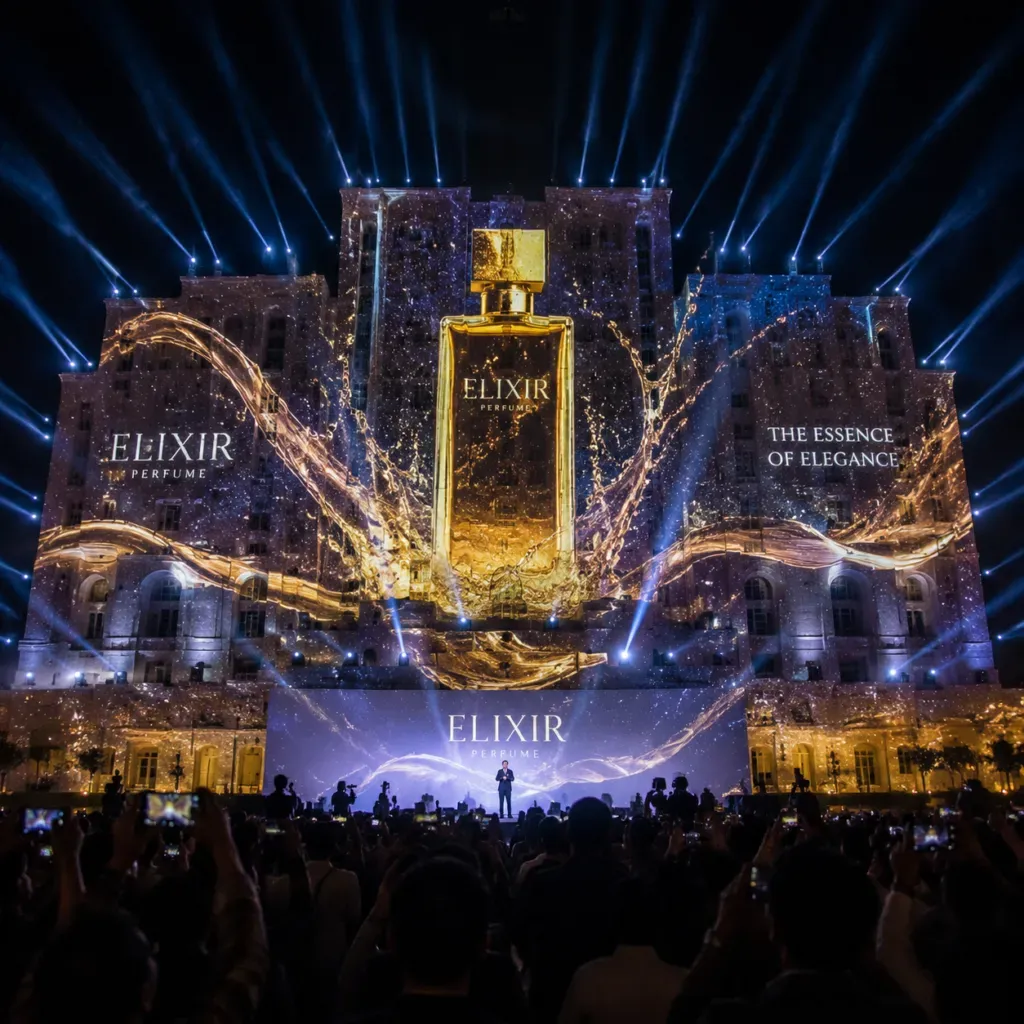
One of the biggest advantages of LED is that it can be installed in very large sizes. For this reason, LED video walls are commonly used.
LED is suitable for:
- Huge video walls
- Creating the stand backdrop
- Advertising from a distance
- Displaying bold, high-impact content
LCD is suitable for:
- Single displays from 43 to 98 inches
- Advertising monitors
- Touchscreens and interactive stands
- Transparent displays (LCD Transparent)
Conclusion:
For large stands and heavy advertising projects, LED is usually the more professional choice.
Difference in Energy Consumption Between LED and LCD
In exhibition projects, power consumption matters, especially in stands where several devices are running at the same time.
- LEDs usually consume more power, especially when brightness is high.
- LCDs offer more optimized power consumption.
Of course, this varies depending on the device model and display size.
LED and LCD Purchase and Rental Costs
Cost is one of the most important criteria in choosing exhibition equipment. LED displays generally cost more, especially when image quality is higher and the Pixel Pitch is lower (better).
LCD cost
LCDs are generally more economical in price, and renting them is also less expensive.
LED cost
LEDs are suitable for large stands and luxury projects, but their purchase or rental cost is higher.
Conclusion:
If you have a limited budget or the exhibition is short-term, LCD is the more economical option.
Comparison of Installation and Transport at Exhibitions
At exhibitions, installation time is limited and equipment must be ready quickly. LED and LCD differ in this area as well.
LED installation
An LED video wall requires specialized installation, because it includes multiple panels, a support structure, cabling, and technical setup. However, the final result is exceptionally professional and eye-catching.
LCD installation
LCDs are usually easier to install. An LCD display can be quickly mounted on a stand or wall and be ready for use.
Conclusion:
If installation time is short or your stand is small, LCD will be faster and easier.
The Durability of LED and LCD in the Exhibition Environment
Exhibitions are busy environments, and equipment is exposed to impact, dust, and frequent movement.
- Because of their modular structure, LEDs are more resistant to minor damage.
- LCDs are more sensitive, and if they are hit, there is a possibility of panel breakage.
LED or LCD? Which Option Is Better for Exhibition Advertising?
There is no absolute answer, but we can say:
If your goal is to be seen from a distance:
LED is better.
because it offers high brightness and large dimensions.
If your goal is to display product details and precise content:
LCD is better.
because it offers high clarity and a more natural display.
If your stand is small:
LCD or an interactive stand is the better choice.
If your stand is large and professional:
An LED video wall is the best option.
Comparing LED and LCD in Terms of Advertising and Branding
Branding at exhibitions means creating a sense of professionalism in the audience’s mind. Displays have a very strong impact in this regard.
The impact of LED on branding
Because of its large size and high brightness, LED creates a sense of power and modernity. Stands that use LED usually look, from a distance, like the stands of international brands.
The impact of LCD on branding
LCD conveys a sense of elegance and high image quality. If your product is luxury-oriented or requires precise presentation, LCD can enhance the sense of trust and quality.
The Role of LED and LCD in Increasing Visitor Dwell Time
One of the criteria for a stand’s success is how long the visitor stays there. Professional displays can increase dwell time.
- LED causes the initial stop (attracts attention)
- LCD encourages a longer stay (examining details)
The best stands usually use a combination of both.
Combining LED and LCD in Modern Stands (A Professional Solution)
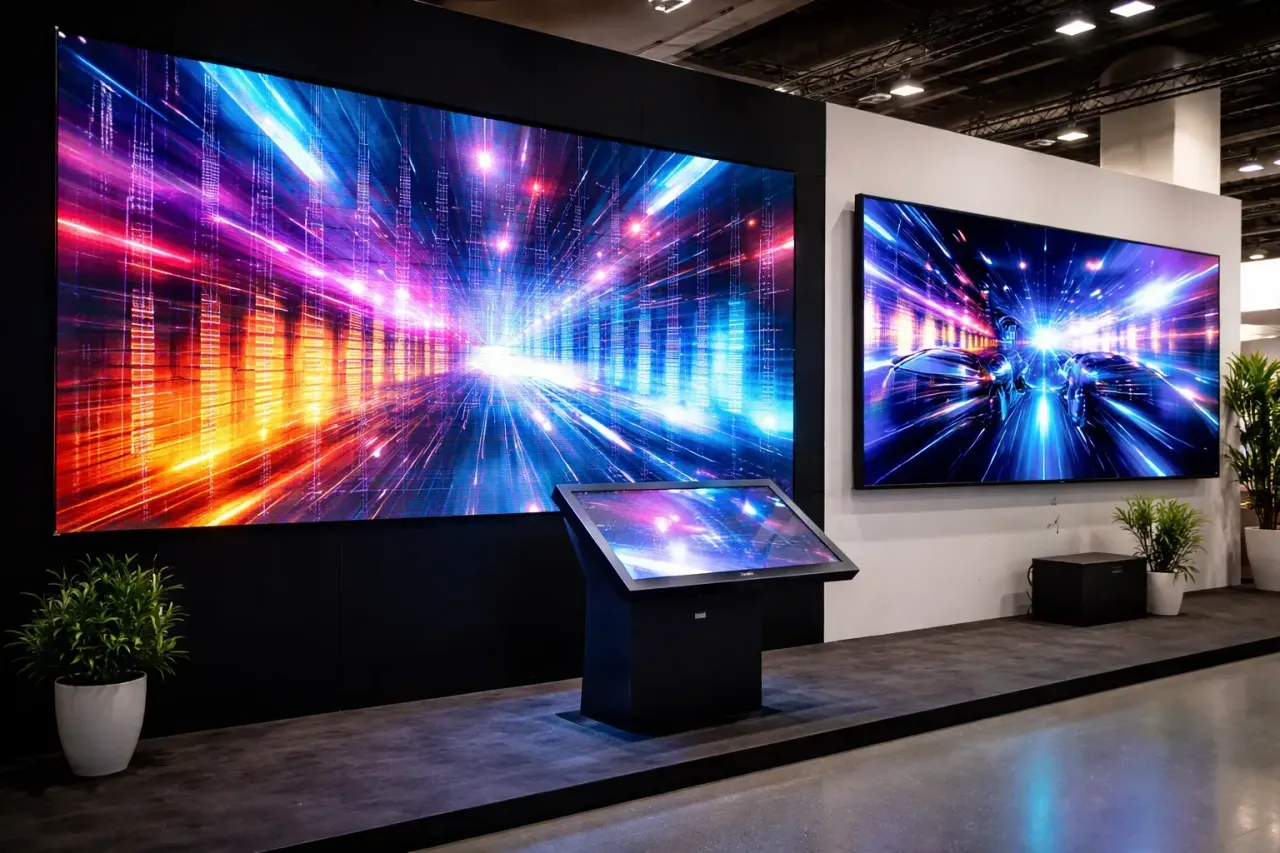
One of the best strategies in exhibition stands is to combine LED and LCD together. This allows you to be seen from afar while also giving visitors a more complete experience once they enter the stand.
Example of a professional combination:
- An LED video wall at the stand entrance to attract attention
- Advertising LCDs inside the stand to introduce products
- An LCD interactive stand for visitor interaction
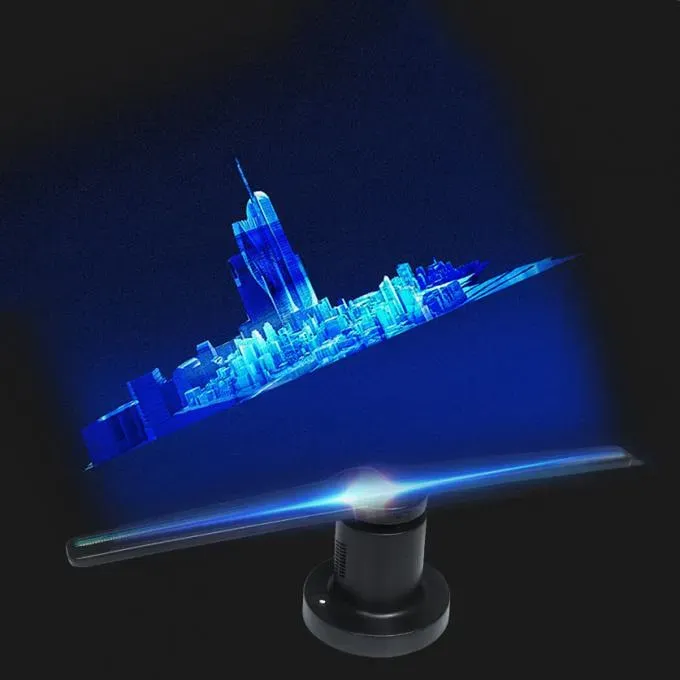
- A holographic pyramid for 3D product display
- Transparent LCD for displaying the real product + digital content
This combination makes your stand futuristic and distinctive.
Transparent Displays; The Future of Digital Advertising in Stands
One of the most attractive exhibition equipment solutions directly related to LCD technology is transparent LCD or a transparent display.
In this technology, the image is displayed on a transparent screen, allowing the visitor to see behind the screen at the same time. This feature creates a sense of trust and visual appeal.
Applications of transparent LCD at exhibitions:
- Presenting the product behind the display
- Displaying the product’s technical specifications on the image
- Creating a luxurious and modern feel in the stand
- Attracting attention from close range
FORESEEN offers rental of transparent LCD for exhibitions for brands looking for distinctive advertising.
Why is renting an exhibition display from FORESEEN a smart choice?
Many brands participate in only a few exhibitions each year. In such conditions, purchasing expensive displays is not always logical. That is why renting exhibition equipment is considered an economical and professional option.
Benefits of renting exhibition equipment from FORESEEN:
- Cost reduction
- Use of up-to-date and modern equipment
- Installation and setup by the technical team
- Support throughout the exhibition
- Ability to choose the best model to suit the stand
In addition to LED and LCD displays, FORESEEN also provides complementary stand equipment, including:
- Exhibition video wall rental
- Touch stand rental
- Digital kiosk rental
- Holographic pyramid rental
- Transparent LCD rental
What type of display is recommended for small stands?
In small stands, the priority is usually equipment that does not take up much space while still delivering maximum impact.
Suitable suggestions:
- 55-inch or 65-inch advertising LCD
- Touch stand for presenting a digital catalog
- Transparent display (transparent LCD) for presenting a specific product
This combination is reasonably priced and, at the same time, makes your stand look more professional.
What type of display is recommended for large stands?
In large stands, the main goal is for the stand to be visible from a distance. In this case:
- An LED video wall is the best option.
- Combining LED with indoor LCDs for detailed product presentation is a professional strategy.
Also, adding equipment such as a holographic pyramid or a virtual showcase can multiply the stand’s appeal.
Quick guide to choosing LED or LCD for exhibitions
If we want to make a very quick decision:
- If the stand is large and brightly lit → LED
- If your content is precise and detail-oriented → LCD
- If you are looking for luxurious and distinctive advertising → transparent LCD
- If the goal is to attract attention from afar → LED video wall
- If the goal is customer interaction → LCD touch stand
Conclusion: Comparing LED and LCD displays at exhibitions | LED or LCD? Which is more suitable for your stand?
Both LED and LCD displays are used in exhibition stands, but the right choice should be made based on the brand’s objective and the stand’s conditions.
In general:
- LED is the best choice for attracting attention from a distance and for large stands.
- LCD is a smarter choice for displaying details, presenting products, and interacting with visitors.
- The combination of LED and LCD creates the best advertising result.
In the discussion of comparing LED and LCD displays at exhibitions, if you want your stand to look truly professional at the exhibition and convert visitors into customers, choosing the right equipment is highly important.
FORESEEN, by providing smart exhibition equipment rental and specialist consultation, can recommend the best LED and LCD equipment according to your budget and stand type, and take full responsibility for its implementation.
Frequently Asked Questions
1. For a small exhibition stand, is LED better or LCD?
For small stands, LCD is usually better, because it is both less expensive and offers high image quality and clarity. It is also easier to install and takes up less space.
2. Why is the LED video wall more popular at exhibitions?
Because it has very high brightness and can be easily seen from a distance. It also makes it possible to build very large displays and gives the stand a more professional and modern appearance.
3. Is renting LED and LCD displays more cost-effective than buying?
Yes, for brands that attend a limited number of exhibitions per year, renting is a more economical option. Renting reduces purchase costs, eliminates maintenance costs, and includes installation and support services.
Need consultation for your next event?
FORESEEN specialists help you choose the best equipment and ideas for your brand and space.